
Choosing an SEO Agency in South Brisbane, Queensland
An SEO agency should review your website and business goals. It should find useful search chances and plan clear improvements. We use a clear process for SEO consulting, technical SEO, on-page SEO, keyword research and SEO audits. You should receive a clear scope, written advice and regular updates. The agency should explain each step in plain language. Compare providers by asking how they find issues, set priorities and measure progress. A good agency links search work with local customer demand. Rankings, traffic and enquiries still depend on competition, authority, site quality and implementation.
What Should You Expect from an SEO Agency?
An SEO agency should start with a meeting, website review and search research. It should then link SEO strategy to your business goals. The plan should explain key technical and content tasks. It should also set clear targets and provide regular updates.
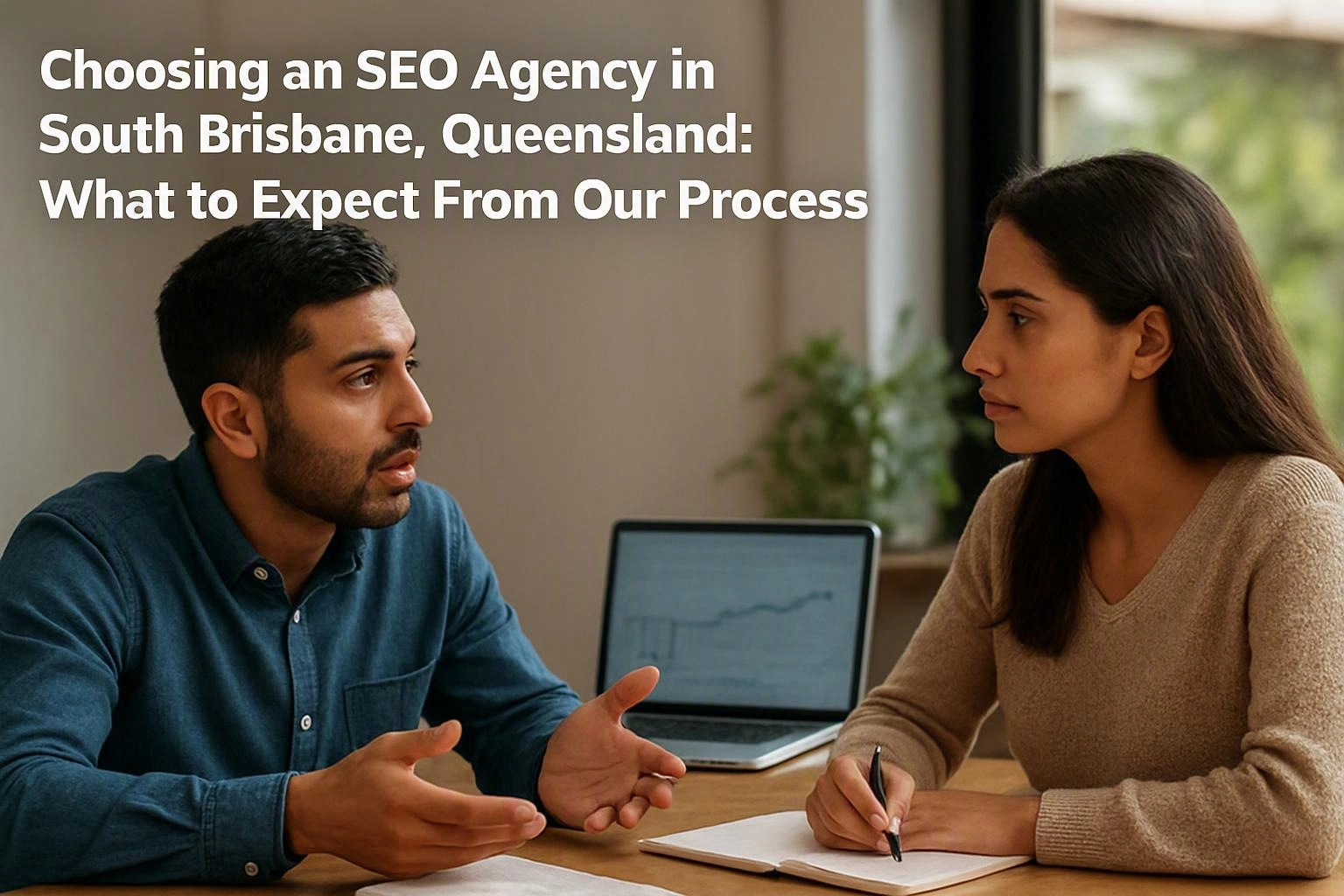
The first step is a talk about your services, customers and sales process. A professional search engine optimisation agency should ask useful questions. It should learn what counts as a good enquiry. It should also ask which services matter most.
South Brisbane, Queensland has a busy commercial setting near Brisbane’s inner city. Your plan may need to separate broad searches from local searches. It should also review service areas and suburb-level competition. Each location phrase may not need its own page.
Industry research matters too. Tourism, professional services, education, retail and local trades all work differently. They can have different busy periods, customer terms and sales steps. Our SEO Consulting in South Brisbane starts by finding these differences. We then link them to useful pages and review points.
Ask if the provider will make the recommended changes. Some providers only write reports. Clear ownership stops tasks from being passed between teams. Good updates explain why each change matters. They should also explain what it needs and how results will be checked.
How Our SEO Process Compares with a Typical Provider?
Process transparency is the best point of comparison. Check the scope, updates, research and priorities. Also check who makes the changes and who reports results. Don't rely on ranking promises or claims that lack proof.
| Factor | This Business | Typical Provider |
|---|---|---|
| Scope clarity | Sets out SEO consulting, audit, research and optimisation tasks before work starts. | May sell a broad package. You may need to check what it includes. |
| Initial diagnosis | Uses SEO audits, website checks and keyword research to set priorities. | May use a set checklist that doesn't suit your website. |
| Communication | Explains advice, needs, progress and next steps in plain language. | Update times and detail may change from one account to another. |
| Implementation | Shows who handles each task. This may be the provider, client or another partner. | May find issues without showing who will fix them. |
| Local search relevance | Links keyword intent and on-page signals with South Brisbane, Queensland demand. | May use broad national or location-based ideas. |
| Reporting | Links reports to search visibility, useful traffic and agreed actions. | May focus on rankings or traffic without business context. |
| Accountability | Records choices, priorities, owners and review dates throughout the work. | This may depend on the package, contact person and team process. |
Most SEO work needs several weeks for research, planning and first checks. Meaningful trends often need longer. The pace depends on site size, access, approval times and competition. It also depends on how fast agreed changes go live.
Our approach won't suit every organisation. The key test is simple. Can the provider show what it will do? Can it name the owner and date? Can it explain how each choice will be checked?
What Happens During an SEO Audit and Discovery Phase?
An SEO audit checks how search engines find, read and use a website. It should review technical SEO, on-page SEO, content, links and page speed. It should also check structured data and local signals. Discovery links these findings with your goals, team and available time.
Technical checks may review crawling, indexation, redirects and canonical signals. They may also check templates, mobile use and page speed. The review shows how Google Search reads your key pages. It can also show how clearly your site links services, audiences and locations.
Local search checks business details and location signals. It also checks the quality of the Google Business Profile. This is more useful than making broad location claims. One business base may serve nearby suburbs. That fact alone doesn't support many new location pages.
Content review checks page value, headings and internal links. It also checks structured data and the match with search tasks. Discovery reviews seasonal demand and customer language. It also checks how people move towards a sale or enquiry.
Turning Audit Findings into Prioritised Actions
Prioritisation turns a long issue list into clear choices. We review search intent, business value, risk and effort. We also check task links and likely user benefit. A serious indexation issue may come before a small wording change.
Internal links should guide people and search engines to useful pages. They shouldn't force exact-match phrases. Content gaps should answer real customer questions. They should also support a clear next step.
How We Move from Research to an Action Plan?
Keyword research turns search evidence into a useful SEO action plan. We start with business discovery and search intent. We then check the site, map content and review each page. The plan names the owner, reason, priority and review method. It doesn't promise a set ranking.
- Clarify services, audiences, business goals and the search area.
- Research keywords, related entities, search intent and competitor content.
- Check crawling, indexation, templates, page experience and internal links.
- Match priority searches with pages and find content gaps.
- Build a roadmap with owners, tasks, priorities and review dates.
- Track agreed measures and update advice as needs change.
The roadmap should match your real service areas. Customers may come from several nearby suburbs. We can review service wording, business details and local intent. We won't create thin pages that repeat the same offer.
That's how we work. Research guides our advice. Advice becomes owned tasks. Results are then checked against the first business goal. SEO Audits may lead to site fixes, content work or tracking changes. Every task should have a clear reason.
Which Questions Should You Ask Any SEO Provider?
Buyers should ask for checkable answers about tasks, priorities and ownership. They should also ask how results are measured and risks are managed. Good answers should fit into a contract or report. Avoid vague task lists and unexplained terms.
Ask to see a sample report layout. It shouldn't include private client details. You should see how technical SEO, content, local search and conversion tracking are covered.
How Do We Measure Progress Without Overpromising?
SEO reporting should cover site health, useful search visibility and organic traffic. It should also cover agreed conversion actions. Google Search Console and Google Analytics can help. Reports still need clear context.
Good reports explain what changed and why it matters. They should also show what remains blocked and what happens next. Useful measures may include indexed pages, impressions and relevant queries. They may also include clicks, useful traffic and completed actions.
A ranking can rise without bringing a useful enquiry. A less common query may bring a ready buyer. Conversion tracking should match the real buying journey. Reports should record launch dates, site changes, seasons and campaigns.
These notes help separate SEO results from other changes. Competition, authority, site quality and implementation also affect search visibility. No responsible provider can control every result.
When a Typical SEO Provider May Be the Better Fit?
A typical SEO provider may suit a business that wants a set package. It may also suit a team that needs little advice. An internal team can handle detailed recommendations. Choose a service that matches your time, skills and need for support.
No single plan suits every business. A clear enquiry about goals, access and duties will help. It can show if you need detailed advice or a set service.
Questions About SEO Agency
What Does an SEO Agency Do for a Business?
It checks a website, studies search demand and suggests site improvements. It can also support the work and report progress. The work should link organic search with goals such as enquiries, bookings, sales or calls.
How Long Does It Take to See Results from an SEO Agency?
Timing depends on competition, authority, site quality and work speed. Early site or indexing gains may appear sooner. Strong search and sales trends often need several months of steady work.
How Much Does It Cost to Hire an SEO Agency?
fair price can be set without reviewing your site, goals and market. Competition, tasks and implementation needs also matter. Ask for a written scope that lists audits, content, technical work and reports.
What Questions Should I Ask an SEO Agency Before Hiring Them?
Ask what gets checked first and which tasks are included. Ask who makes each change and how keywords are chosen. Also ask how results are measured and how risky work is avoided.
Can an SEO Agency Guarantee First-Page Rankings?
No responsible provider can guarantee first-page rankings. Results depend on competition, search habits, authority and site quality. Choose a provider that offers a clear process and honest reports.
To discuss your goals, website limits and next steps, contact our team for a clear talk about scope and delivery.
Related Resources
How Much Does SEO Cost in Brisbane?
SEO agency Brisbane cost
What It CostsHow Much Does Ecommerce SEO Cost in Australia?
ecommerce SEO agency cost
What It CostsEnterprise SEO Costs in Australia: What Large Websites Need
enterprise SEO agency cost
How It WorksHow Long Does SEO Take to Work? A Practical Agency Timeline
how long does SEO take to work