Trusted Local Service Experts
Numbered checklist: warning signs your business isn't optimised for voice search
-
Front‑loaded answer: Your site uses short, commercial keywords rather than conversational keywords or long‑tail phrases, so it won't match natural language voice queries.
If your copy focuses on single keywords like "plumber South Brisbane" instead of questions and phrases such as "who can fix a burst pipe near South Brisbane now?", you've missed conversational search and conversational keyword research. Optimise pages for natural language and FAQ schema to capture question-style queries.
-
Front‑loaded answer: Slow page speed and poor Core Web Vitals stop voice assistants and mobile users from getting answers quickly.
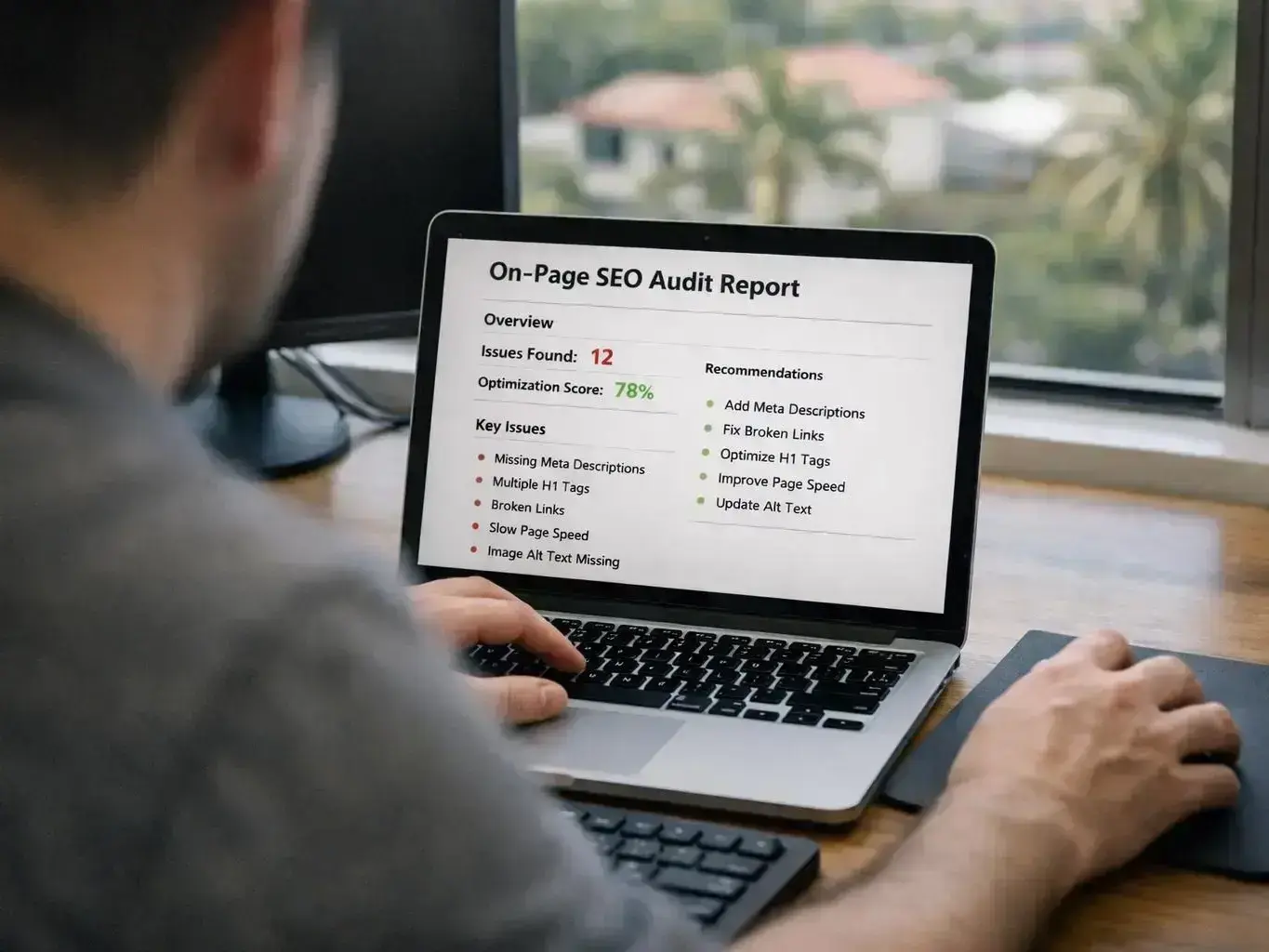
Typical problems include large images, render‑blocking scripts, and no caching. Since most voice queries are mobile, page load time and mobile‑first design directly affect whether a page is eligible for a featured snippet or answer box. Improving page speed is a measurable first fix.
-
Front‑loaded answer: Your site is not mobile‑optimised, so it fails mobile usability checks that matter for voice query optimisation.
Mobile optimisation covers responsive layout, tap targets and readable text sizes. Voice assistants prefer pages that render well on phones; without mobile‑first pages your local SEO and visibility to Google Assistant or Siri decline.
-
Front‑loaded answer: Inaccurate or inconsistent NAP details across directories and your Google Business Profile reduce local relevance and trust.
If your address or trading hours vary between your website, Google Business Profile and local citations, voice assistants may not surface your business for local intent queries. NAP consistency is a local data component that supports citations and maps visibility.
-
Front‑loaded answer: Your Google Business Profile is incomplete, unverified, or not optimised for voice queries.
Missing categories, weak descriptions and no regular Q&A or posts hurt local relevance. Google Business Profile—local relevance is critical for appearing in local packs and for voice assistant responses that draw from the listing.
-
Front‑loaded answer: You lack schema markup / structured data like FAQ schema, so search engines can't extract concise answers for featured snippets.
Without structured data snippets and schema markup, your content is harder to parse for a featured snippet. Implementing schema markup / structured data increases the chance of being chosen for answer boxes and rich results.
-
Front‑loaded answer: Pages don't target local intent with city phrases, local landing pages or hyponym pages, so you miss geographically specific queries.
Create local landing page optimisation and conversational content that mentions landmarks, suburbs and service areas. Hyponyms like "local landing page optimisation" help shape topical relevance for South Brisbane.
-
Front‑loaded answer: You have no FAQ pages or poorly structured Q&A, so you lose chances for featured snippets and FAQ schema optimisation.
FAQ schema optimisation is a hyponym of structured data work. Adding clear question/answer blocks written in natural language targets conversational search and improves the odds of voice assistants finding exact answers.
-
Front‑loaded answer: Your site lacks local content and co‑occurring entities like local citations and reviews, lowering trust signals for voice query results.
Co_occurrences such as mobile usability, page load time and local citations build context. Encourage reviews, local blog posts and partnerships to strengthen local search signals and increase conversion chances from voice traffic.
-
Front‑loaded answer: You haven't tested discoverability with voice assistants (Google Assistant, Siri), so you don't know how your answers appear in practice.
Create test queries, check featured snippet behaviour and use conversational keyword tests. This identifies gaps where an SEO audit or small fixes can deliver measurable outcomes.
Why these signs matter for local visibility and conversions?
Direct answer: These signs matter because voice search and local search change how people find businesses—if you miss conversational search cues, you lose the chance to appear in a featured snippet or voice assistant response and miss ready‑to‑act customers.
When a business appears in a featured snippet or answer box it often gains higher click‑through and conversion rates for local intent queries. Fixing Core Web Vitals, improving Google Business Profile accuracy and adding schema markup / structured data helps search engines present your business as the quick, reliable answer voice assistants should read aloud.
Technical checklist to fix voice search issues
-
Direct answer: Prioritise schema markup and mobile optimisation first to make content machine‑readable and phone‑friendly for voice assistants.
-
Implement schema markup / structured data such as FAQ schema, LocalBusiness schema and openingHours to improve structured data snippets and the chance of a featured snippet.
-
Run a page speed audit and address Core Web Vitals: compress images, defer non‑critical scripts, enable caching and use a CDN for typical improvements.
-
Ensure mobile optimisation: adopt mobile‑first templates, check tap targets, font sizes and avoid interstitials that break mobile usability.
-
Validate NAP consistency across the site, Google Business Profile and key local citations; fix any discrepancies and claim unverified listings.
-
Author conversational content and long‑tail queries: add Q&A pages, local landing pages and short answer paragraphs that mirror natural language questions.
-
Use structured testing with Google Assistant and Siri to see how your answers are read aloud; iterate based on which pages are chosen for answer boxes.
-
Monitor outcomes: track featured snippets, local pack rankings and referral traffic from voice tests as measurable indicators of improvement.
DIY vs Professional: comparison for solving voice search problems
| Factor | DIY | Professional |
|---|---|---|
| SEO audit for voice queries | You can run free tools and basic audits to spot obvious issues like page speed and missing FAQ schema; typical DIY audits identify surface problems. | An agency offers a comprehensive SEO audit that maps conversational keyword research, tests voice assistants and prioritises fixes with measurable KPIs. |
| Implementing schema markup | Small sites can add FAQ schema and LocalBusiness markup with plugins or manual templates; works if you follow guidelines carefully. | Agency services include correct schema markup / structured data implementation and validation across templates and CMS at scale. |
| Improving page speed & Core Web Vitals | DIY fixes like image optimisation and lazy loading help; more technical problems may be hard to resolve alone. | Professionals tune hosting, CDN, and code to reliably improve page speed and mobile‑first performance across many pages. |
| Google Business Profile & NAP consistency | You can update your Google Business Profile and manually check citations; this is effective for small local updates. | An agency manages ongoing NAP consistency, reviews strategy and local listings at scale to sustain local relevance. |
| Local content & conversational keyword work | Small businesses can write local pages and FAQs targeting long‑tail queries, a good start for immediate gains. | Professionals provide structured conversational keyword research, content calendars and landing page optimisation for sustained growth. |
| Measuring outcomes | You can track rankings and traffic but may miss voice-specific signals like assistant readouts or featured snippet attribution. | Agency services include monitoring featured snippets, local pack performance and conversion tracking tied to voice query optimisation. |
Bottom line: DIY is suitable for quick wins and smaller budgets; hiring an agency accelerates fixes and provides measurement, especially when you need reliable local SEO and voice search optimisation at scale.
Practical local optimisation steps for South Brisbane businesses
-
Direct answer: Fix NAP consistency and tidy your Google Business Profile first to get immediate local relevance gains.
-
Audit and update your Google Business Profile—local relevance items: categories, services, opening hours and short natural‑language descriptions that match conversational search.
-
Create or refine local landing pages for South Brisbane, using long‑tail queries and local content referencing nearby suburbs and landmarks.
-
Add FAQ schema and concise answer paragraphs written in natural language to target featured snippets and voice query optimisation.
-
Ensure mobile optimisation and fast page speed; test on real devices and with voice assistants like Google Assistant and Siri.
Frequently Asked Questions
If you want a practical audit that maps each warning sign to fixes and outcomes for your South Brisbane business, book a free review with SeoAgencyBrisbane.
/images/authority/seo-agency-signs-of-voice-search-ignorance.jpeg
/contact/