
SEO Conversion Checklist: Turn More Traffic Into Leads
An SEO conversion rate optimisation checklist helps find why website visits don't become leads. It checks intent, page fit, trust, calls to action, forms, speed and tracking. Start with traffic quality and page fit. Then improve the first screen, service CTAs, forms and mobile use. Test one clear change at a time. Track forms and calls as conversions. Compare organic landing-page results before and after each change.
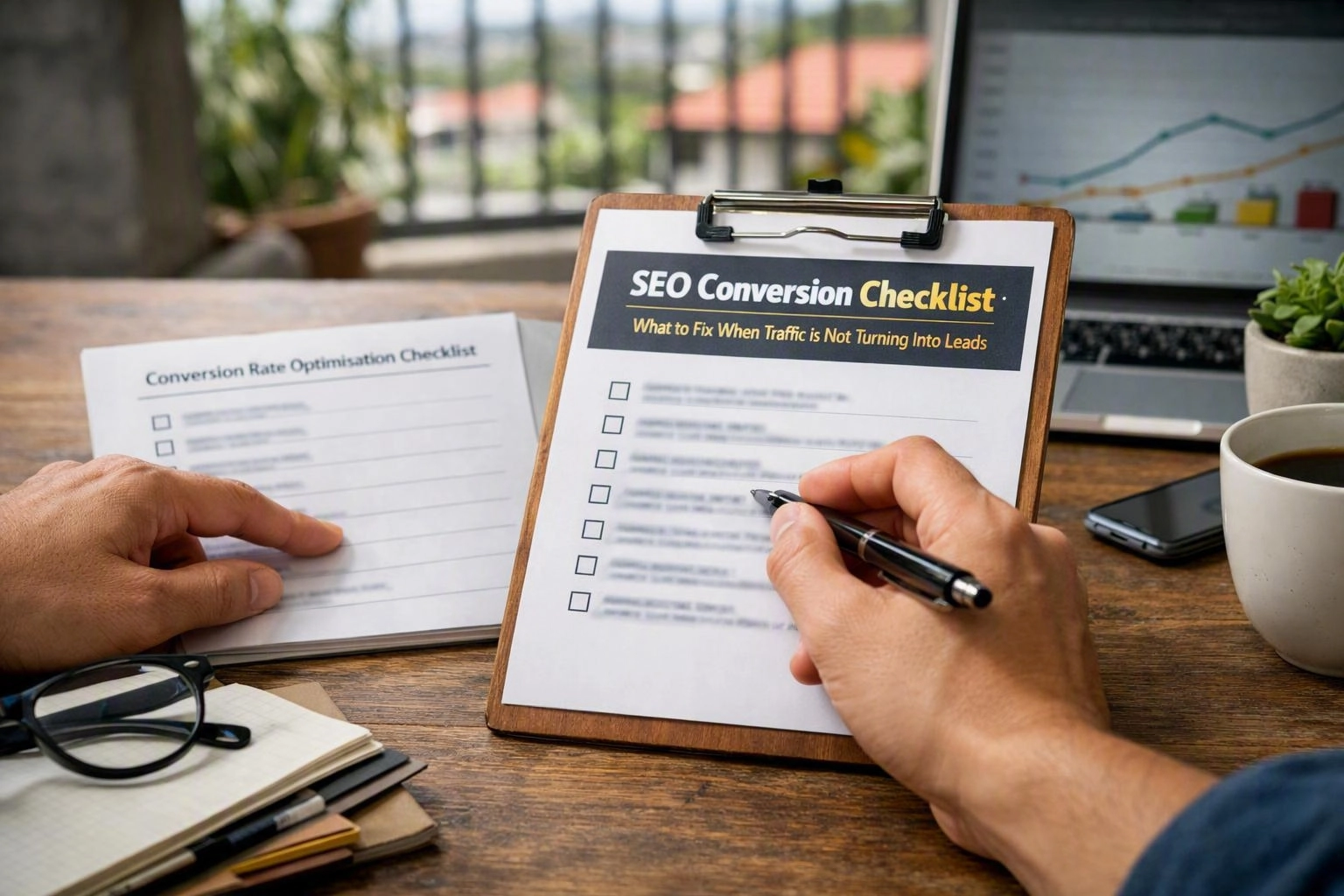
Why Is Your Website Getting Traffic but No Leads?
Organic traffic brings few leads when search intent, page content and the next step don't match. Common causes include poor visitors, weak offers, unclear services, low trust, poor mobile use, slow pages and long forms.
First, ask what the visitor expected to find. An information searcher may want a guide, meaning or comparison. A buyer may compare providers and seek process details, proof, availability or an easy enquiry path. Sending both groups to one general page often causes confusion.
Review the query, title, opening and offer together. The landing page should confirm the visitor's problem. It should explain the right service. It should make the next step clear.
A page may rank for a broad term but discuss one narrow service. Traffic can look strong while lead quality stays poor.
Trust matters for high-value enquiries. Explain who the service suits and what happens after contact. State the usual reply time and explain how you handle personal details. Use real proof and clear claims. Don't make promises you can't support.
Check technical barriers too. A slow mobile page can hide real demand, so can a broken button, call tracker or consent setting. Our team uses Conversion Rate Optimization and practical SEO reviews to link these issues with lead growth, not just page activity.
Before You Change Anything, Check the Conversion Evidence
Conversion evidence shows where organic visitors stop. It also helps you avoid guesswork. Before changing a page, compare visits, queries, engagement, form starts, submissions, calls and qualified leads. Check these results by device and intent.
Use the following Before checks to set a clear starting point. Consent, device paths and later conversions can change the numbers. Note these limits before you draw conclusions.
A useful baseline may cover several weeks or a few months. The right period depends on traffic levels. Smaller sites often need longer. Don't treat one short spike, device or query as the full picture.
What Should a Conversion Rate Optimisation Audit Check?
A conversion rate optimisation audit checks the path from search result to lead. It covers intent, page fit, ease of use, speed, trust, calls to action, forms, access, analytics and follow-up.
The audit should link each issue to its effect on conversions. It should also set a clear fix and owner.
Use this table to turn a broad review into a clear check. Record the finding, audience, likely effect and owner.
| Audit area | What to check | Conversion question |
|---|---|---|
| Search and technical SEO | Indexing, titles, speed, redirects, structured data and analytics consent | Can the right visitor reach a reliable, measurable page? |
| Intent and relevance | Query-to-page mapping, commercial intent and content quality | Does the page answer the reason for the visit? |
| User experience | Navigation, readability, mobile usability, accessibility and page speed | Can visitors understand and act without avoidable effort? |
| Trust signals | Testimonials, case evidence, privacy information, process and response expectations | Have reasonable concerns been answered? |
| Funnel analysis | CTA clicks, form starts, errors, submissions, calls and follow-up | Where does progression stop? |
| Lead handling | Qualification, response time, attribution and sales feedback | Are conversions becoming useful enquiries? |
These red flags need quick action. They can make other reviews and tests unreliable:
Check access needs too. Review contrast, labels, focus order, alternative text and error messages. These features support a fair user experience.
During the Page Review, Fix the Highest-Impact Friction First
Page problems often appear in the first screen, content order, proof, menu or mobile layout. Make the page fit clear at once. Support claims with real proof. Remove anything that blocks the main path.
Use this During checklist to view the page like a visitor. Read it on a phone first. Then test it with a keyboard and screen reader.
Visitors at different stages need different choices. A researcher may want a guide or process page. An active buyer may want a direct consultation. A smaller first step can help researchers. Keep the main enquiry path easy to find.
We explain who we are with clear process details and honest limits. We don't rely on broad sales claims. This matters when visitors compare providers before a high-value enquiry.
How Do You Improve Conversions from Organic Traffic?
Organic conversion rates improve when each query reaches a page that fits its intent. The page also needs a clear and trusted next step. Match keywords to focused pages. Explain the service. Answer concerns. Improve links. Keep forms simple.
Start with keyword-to-page mapping. A service query should usually reach a focused service page. A problem query may need a helpful article. That article can link to the right offer.
Don't force every visitor to enquire at once. Some people need to understand the issue first. Others need time before they trust the next step.
Make service details easy to find. Explain the scope, use cases, stages, time, inclusions and exclusions. Explain what happens after contact. Visitors can then decide if the offer fits.
Good content isn't just long. It gives correct answers and clear examples. It also explains useful differences. Use words that match real customer questions.
Internal links should guide visitors from learning to comparing and action. Visitors shouldn't need to search again.
Lead Gen Marketing can support this work. It joins search demand with page copy, tracking and follow-up. An SEO Agency may bring technical skills. The useful result is a stronger path from visit to qualified conversation.
What Makes a High-Converting SEO Landing Page?
A high-converting SEO landing page matches the searcher's intent. It states a clear value proposition and explains the service. It also gives one clear next step. Useful proof, easy reading, good access and fast loading support the page.
The headline should show visitors they've reached the right place. Supporting copy can explain the problem, audience and result. The unique value proposition should explain the offer's fit.
Use a clear order. Start with the problem, solution and fit. Then explain the process, proof, common concerns and action.
Testimonials can reduce doubt. They must be real and relevant. Place them beside the service claim they support. Neutral trust language works better than vague promises.
Use one main action, such as an enquiry or consultation. Repeat it at useful points. A second action could be a guide or comparison page.
Good technical work protects the user experience. Improve loading, keyboard access, headings, labels, contrast and mobile use. Schema markup helps search engines read page content. It can't fix a weak offer or poor page fit.
Review landing pages in stages. Teams often find five to eight priority changes. Make the safest high-impact fix first. Measure it before making another major change. This keeps the results clear.
How Can You Reduce Website Enquiry Form Abandonment?
Website enquiry form abandonment falls when forms ask only for needed details. Forms must also work well on mobile. They should explain what happens next.
Use fewer fields and clear labels. Show helpful error messages. Keep entered details after an error. Explain privacy and reply times.
Use this During form checklist before changing the design:
Don't measure completed forms alone. Compare views, starts, errors, exits, submissions, calls and qualified results. A short form isn't always better. It may bring many poor-fit leads.
Where Should Calls to Action Appear on a Service Page?
Calls to action should appear after the opening value proposition. Add them near useful proof, after the service details and at the page end. Place them after key questions have been answered.
Repeat the main action in the same way. Offer a smaller step for visitors who aren't ready to enquire.
Keep the wording and destination consistent. Visitors should know what happens next. Don't make users scroll back to find the action. Don't ask too soon, either.
After the Fix: Test, Measure and Prioritise the Next Change
Testing shows if a change improves business results. Clicks alone aren't enough. Track conversion rate, qualified lead rate, assisted conversions, call quality and form completion.
Check these results by page and device. Record the result before choosing the next change.
Use this After checklist to protect the quality of the result:
Conversion tracking should match real business results. Track enquiries, calls, forms and qualified conversations.
A change that raises clicks but lowers lead quality hasn't worked. Review the results with care. Base the next change on evidence.
Questions About SEO Agency
What Is a Good Conversion Rate for Organic Traffic?
There is no single target for organic traffic. Results vary by industry, intent, offer, device and lead type. Set a baseline by page and query group. Focus on qualified leads, call quality and completed enquiries. Don't rely on an unsupported benchmark.
How Do I Track Leads from SEO?
Use analytics and search data to find organic landing pages. Set events for form submissions, calls and agreed actions. Check consent, call tracking, thank-you pages, device paths and CRM results. This captures first visits and later assisted conversions.
How Can I Optimise My Website for Lead Generation?
Match search intent to focused pages. Explain the offer clearly and build trust. Improve mobile use and use clear calls to action. Keep the enquiry form simple. Measure forms, calls and qualified results. Link each change to lead growth.
What Is the Difference Between SEO and Conversion Rate Optimisation?
SEO helps relevant people find a website through search. Conversion rate optimisation improves what happens after the visit. It helps suitable visitors understand the offer and act. Both work together. More traffic can't fix a poor page. A strong page needs relevant traffic.
How Long Does Conversion Rate Optimisation Take to Work?
Timing depends on traffic, conversion numbers, change size and data quality. Technical fixes may help quickly. Reliable tests need enough results. Review early signs, allow time for proof and don't call a winner from one short spike.
Use this organic conversion optimisation checklist as a working guide. Find the leak, make one change, measure the result and choose the next fix.
Discuss your conversion improvement planRelated Resources
How Much Does SEO Cost in Brisbane?
SEO agency Brisbane cost
What It CostsHow Much Does Ecommerce SEO Cost in Australia?
ecommerce SEO agency cost
What to AvoidKeyword Cannibalisation: Mistakes That Make Your Own Pages Compete
keyword cannibalization SEO
What to AvoidSEO Content Mistakes That Stop Good Pages From Ranking
SEO content mistakes