How Local SEO and Google My Business work for South Brisbane
Local SEO and Google My Business together increase local visibility, drive foot traffic and generate qualified leads for South Brisbane businesses by aligning on consistent NAP data, optimised GMB listings, local content and citation strategies.
Why combine local SEO and Google My Business in South Brisbane?
Direct answer: Combining local search optimisation and Google My Business raises your chance to appear in the local pack and on Google Maps for South Brisbane searches.
Local SEO, the broader field of search engine optimisation for neighbourhood queries, integrates with Google My Business (also known as Google Business Profile) to unify signals like NAP consistency, local content and structured data. This alignment improves map rankings and click-throughs for queries with local intent. Use schema.org localBusiness and Other structured data fields to reinforce the GMB entry, and keep local citations accurate so Google trusts your listing. Reviews and reputation also feed map visibility: consistent citations plus review management lift trust and conversions.
The semantic relationship is clear: Local SEO integrates with Google My Business to improve local search visibility for South Brisbane businesses—a practical step toward better in-store visits and phone calls.
4 scenarios when you need both services together
Direct answer: Use both services when your goals include map visibility, foot traffic and coherent local listings across platforms.
- Small bricks-and-mortar business aiming to appear in the local pack and drive walk-ins from South Brisbane neighbourhood searches.
- Service-area business that needs a verified Google Business Profile for local service queries and clear service-area settings.
- Multi-location brand that must synchronise NAP across multiple GMB listings and local citations to avoid duplicate or conflicting entries.
- New product or seasonal offering that benefits from fast GMB posts plus local content pages to capture immediate local intent.
- Reputation recovery or growth plan where review management and local citation building are run alongside on-page local optimisation.
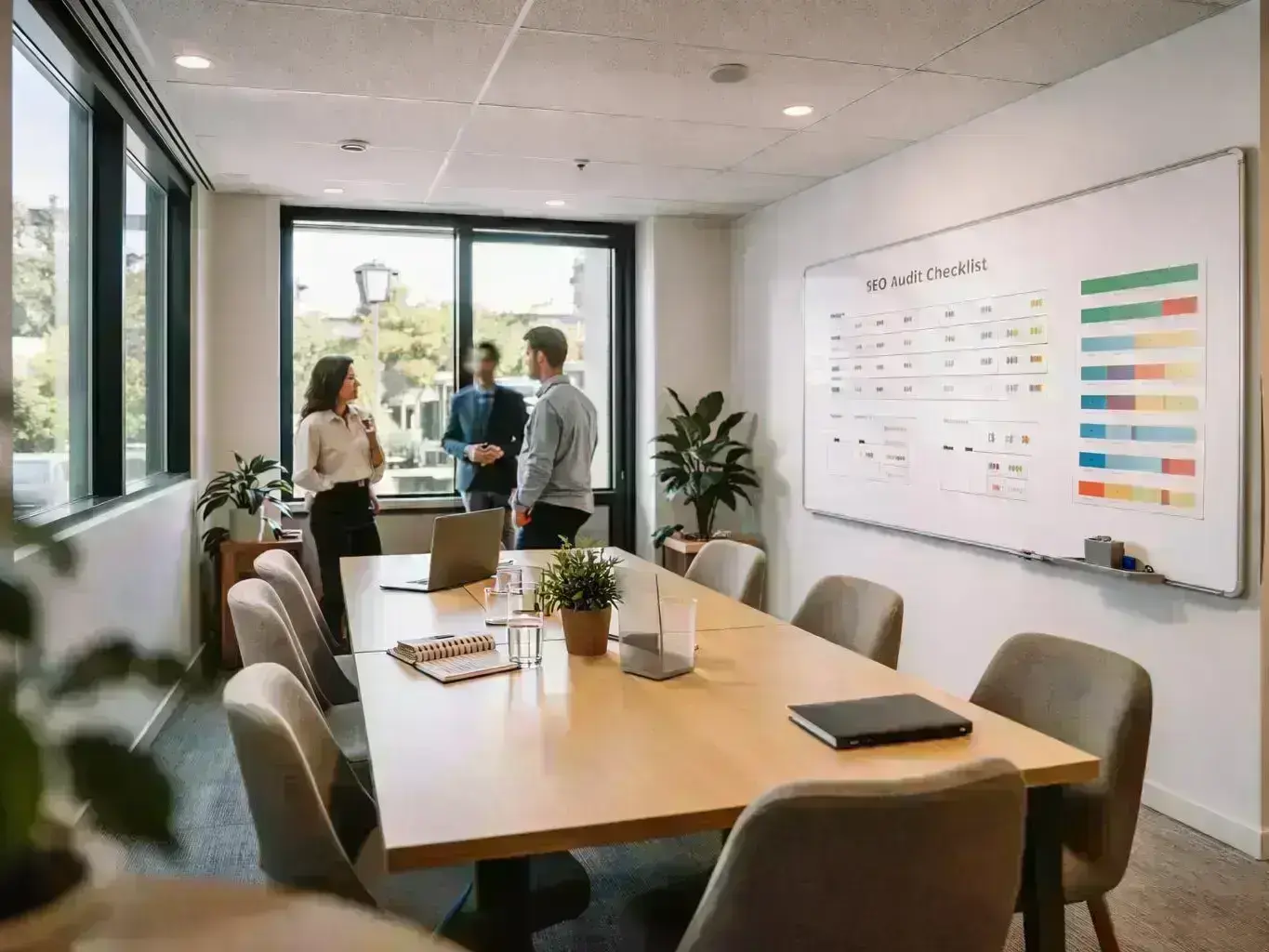
Step-by-step checklist: synchronise GMB and local SEO
Direct answer: Follow a clear sequence: verify your listing, fix NAP consistency, optimise on-page signals and track metrics.
- Verify Google Business Profile — claim and confirm your GMB listing so you control the information Google shows.
- NAP consistency — audit all directories and your website for exact Name, Address, Phone; correct mismatches and remove duplicates.
- Primary category and services — choose the best primary category and add hyponym service entries to match local search queries.
- On-page local optimisation — add schema.org localBusiness markup, localised titles and content that reflect South Brisbane suburbs and landmarks.
- Local citations — build and maintain citations on reputable directories, ensuring structured data fields match your GMB entry.
- Reviews and reputation — implement review requests, respond to feedback and highlight positive reviews on landing pages to raise conversion rate.
- Photos and posts — upload geo-relevant images and weekly GMB posts to show activity; Google rewards fresh, local content.
- Tracking and reporting — connect search console, analytics and GMB insights; track impressions, clicks and calls to measure impact.
- Local link and content plan — create neighbourhood pages, event posts and partner lists to support local relevance and map rankings.
- Ongoing audit cadence — schedule quarterly checks for NAP consistency, citation health and schema markup updates.
GMB optimisation table: fields, tactics and KPIs
Direct answer: Focus on key GMB fields, apply specific tactics, and measure local KPIs like impressions, clicks and calls.
| GMB field | Tactic | Primary KPI |
|---|---|---|
| Business name | Use legal business name; avoid keyword stuffing; mirror NAP on-site. | NAP consistency score; listing accuracy |
| Primary category | Select exact category and add service hyponyms for specific searches. | Map rankings for category queries |
| Address & service area | Verify physical address or set service-area business parameters correctly. | Local pack impressions; map visibility |
| Phone & URL | Ensure phone matches website contact; use consistent URL and landing pages. | Clicks to website; call clicks |
| Photos & posts | Add geo-tagged images and weekly posts highlighting local events or offers. | Engagement on GMB; photo views |
| Reviews | Collect reviews, reply promptly, and showcase testimonials on landing pages. | Average rating; review volume; conversion rate |
Local content and citation strategy for South Brisbane
Direct answer: Prioritise neighbourhood pages, event posts and consistent citations to improve local relevance.
Create pages that answer local intent: suburb-specific service pages, event guides for South Bank or West End, and blog posts about nearby landmarks. Use local content with natural mentions of Google Maps locations and internal links to GMB landing pages. Build local citations on council pages, chambers of commerce and trusted directories; treat them as structured data fields that must match your website and Google Business Profile exactly. Typical projects see citation efforts spread across 20–60 directories depending on sector; most projects fall between low and moderate effort depending on competition. Use schema markup for each location and test with structured data tools to ensure schema.org localBusiness is implemented correctly.
Reviews, reputation and conversion optimisation
Direct answer: Manage reviews proactively and connect reputation work to conversion-focused pages to raise calls and visits.
Encourage reviews after service, respond to feedback, and highlight positive testimonials on service pages. Review management, a hyponym of reputation work, impacts click behaviour in the local pack and on Google Maps. Use on-page social proof and optimised meta snippets to increase click-through rates. Typical improvements are incremental—most businesses report better conversion rate after steady review growth and quick responses. Also implement structured data for reviews where appropriate and ensure ratings shown align with Google My Business to avoid mixed signals.
Measuring success: metrics and reporting for related pages
Direct answer: Track impressions, clicks and calls from GMB insights and analytics to measure local SEO impact.
| Metric | What it shows | Typical range (illustrative) |
|---|---|---|
| Impressions | How often your GMB or local page appears in search and maps. | Most projects see impressions grow steadily over weeks |
| Clicks | Clicks to website, driving directions or GMB calls. | Typical click-through improvements are incremental; depends on SERP position |
| Calls | Phone calls recorded from GMB or click-to-call on pages. | Business-dependent; most see increased calls with higher review volume |
| Map rankings | Position inside the local pack for target keywords. | Improves with NAP consistency and citation building |
Local FAQs and next steps with SeoAgencyBrisbane
Direct answer: The FAQ below answers common local questions and explains how a local audit from SeoAgencyBrisbane starts the action plan.
Frequently Asked Questions
Next steps: request a free local audit from SeoAgencyBrisbane to get a precise action list for your South Brisbane pages and GMB entry.