Next, asset work removes render-blocking CSS/JS, applies minification, and splits bundles so critical content loads immediately. Images are handled via progressive compression, responsive sources and lazy loading. Finally, we integrate a CDN to serve assets from the nearest edge, reducing latency for South Brisbane visitors. Ongoing monitoring uses Lighthouse reports, synthetic checks and field data to keep Core Web Vitals within target ranges.
Schema Markup Implementation to complement speed and visibility
Schema markup helps search engines present faster, clearer information and can work alongside speed gains to improve discoverability.
We add relevant Schema markup—related entity enhancing search visibility such as LocalBusiness, Service and Product schemas so rich results are eligible. Structured data does not speed pages directly but increases click-through rates from search, making the gains from page performance tuning more valuable. Schema also helps search features show concise answers for local queries, pairing visibility improvements with the faster experience created by the optimisation stack.
Local case study: South Brisbane speed improvements and outcomes
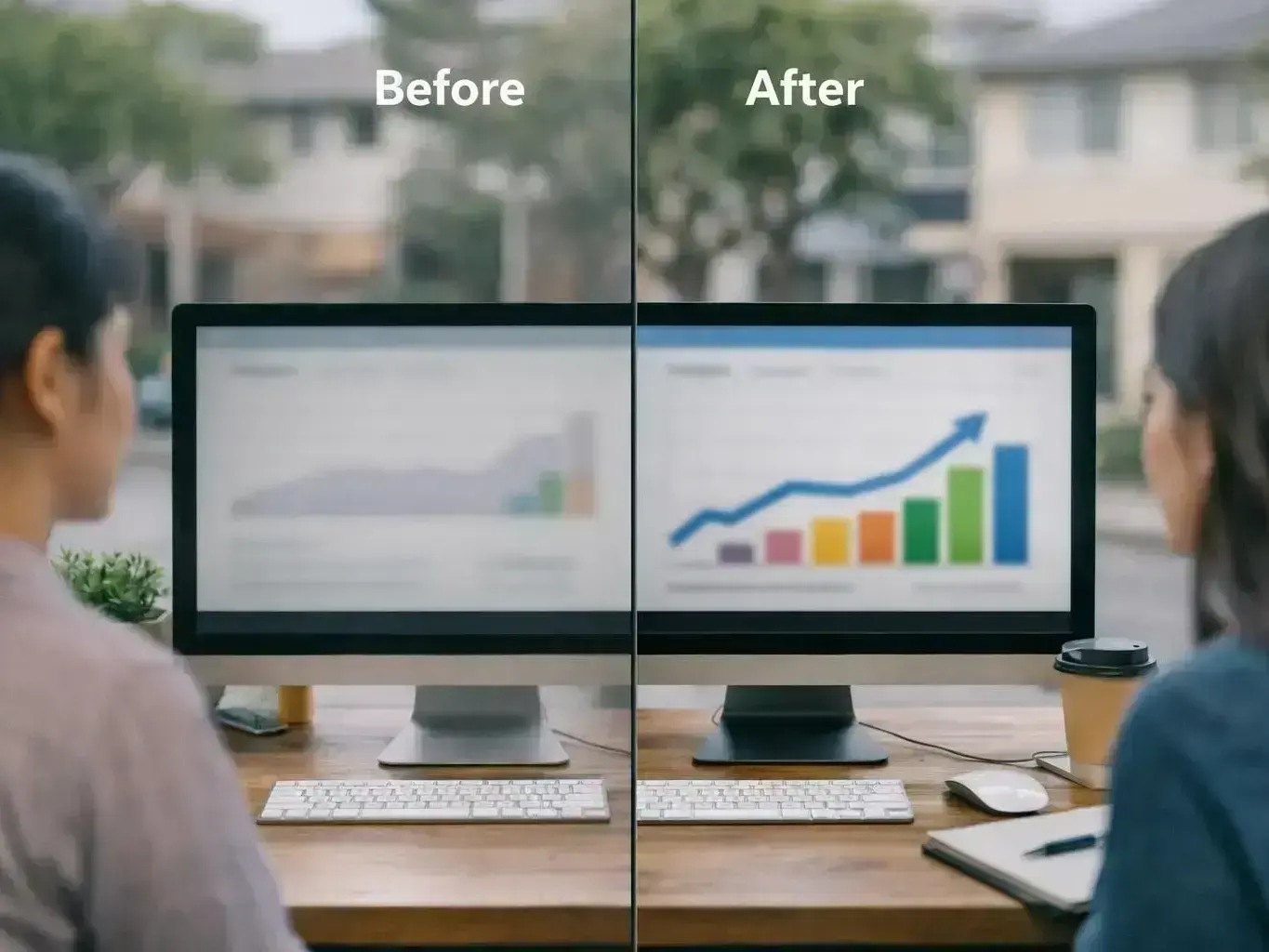
A focused audit and follow-up fixes produced typical gains in Core Web Vitals and organic engagement for a local business after a measured rollout.
In a South Brisbane small business engagement we began with a Lighthouse report and field data to set a baseline. The audit revealed slow server response time, oversized images, and several render-blocking third-party scripts. We implemented a caching strategy, switched key assets to a CDN (Content Delivery Network) — optimisation tool, applied image optimisation and minification of code. Over subsequent weeks the client saw typical improvements: better Largest Contentful Paint and reduced First Input Delay and Cumulative Layout Shift ranges (illustrative), higher Lighthouse scores and a measurable uplift in organic traffic and conversion rate. These improvements are representative of what city-scale South Brisbane sites can expect when technical SEO and structured data are paired with disciplined monitoring.
Frequently Asked Questions
Technical SEO improves speed by diagnosing issues with a Lighthouse report and then fixing server configuration, asset delivery and caching. Actions such as reducing server response time, applying image optimisation, enabling a CDN, and removing render-blocking resources result in faster Largest Contentful Paint and lower First Input Delay for South Brisbane users.
Aim for the standard Core Web Vitals targets: LCP under ~2.5s, FID (or its lab/field equivalents) under ~100ms, and CLS under ~0.1. These illustrative thresholds are broadly applicable in Queensland; local network conditions and device mix may affect achievable ranges, so use Lighthouse report baselines to set realistic targets.
Rankings can improve over weeks to months. Typical projects see measurable Core Web Vitals and Lighthouse score improvements within days, with search engines reflecting those changes over several weeks as pages are re-crawled and field data stabilises. Exact timing varies by site size and crawl frequency.
A CDN is often beneficial but not always mandatory. For static-heavy sites or those with visitors across Australia, a content delivery network lowers latency and improves LCP. For purely local audiences with a well-optimised server, gains may be smaller; evaluate via a Lighthouse report and field metrics before deciding.
Typical issues include oversized product images without proper image optimisation, many third-party tracking scripts that create render-blocking behaviour, weak caching strategy, and no automated minification or asset pipeline. Addressing these areas usually improves Lighthouse score, Core Web Vitals and conversion uplift.